
Charles Nelson, Ph.D.
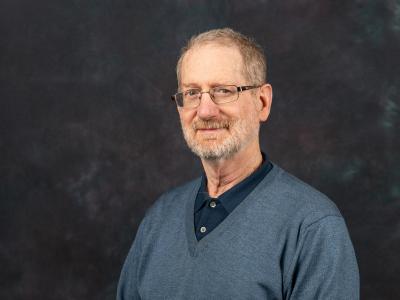
My research looks at how students learn to write in another language. Most research to date has been descriptive in nature but not explanatory. To help me develop an explanatory model for learning to write, I use three complementary theories: complexity science, activity theory, and radical constructivism.
Education
Ph.D., Foreign Language Education, The University of Texas at Austin
Courses Taught
- ENG 1030 College Composition
- ENG 2101 Structure and Origins of the English Language
- ENG 2020 Writing
- ENG 3021 Cultural Rhetorics
- ENG 5002 Composition Studies Research & Methods
- ENG 5010 Writing Seminar
- ENG 5125 Sociolinguistics
Selected Publications
- The technology coach: Implementing instructional technology in Kean University's ESL Program (2011, with Sharon Snyder, Linda Best, and Ruth Griffith). Composition Forum, 24. Available at http://compositionforum.com/issue/24/kean-tech-coach.php
- Web 2.0: A new generation of learners and education (2008, with D. Rosen). Computers in the Schools, 25(3/4), 211-225.
- Tagging, aggregation, and social-relational models (2006). Proceedings of the 2005 Complexity Science and Educational Research Conference (pp. 31-43), November 20-22, Robert, LA. Online at https://www.academia.edu/5503827/Tagging_Aggregation_and_Social_Relational_Models
- Building blocks and learning (2004). Complicity: An International Journal of Complexity and Education, 1, 39-55. Online at https://journals.library.ualberta.ca/complicity/index.php/complicity
- Learning networks and knowledge flows in the L2 composition classroom (2004). In Kuldip Kaur (Ed.), Second Language Writing (pp. 230-253). Kuala Kumpur: Sasbadi
Teaching Philosophy
During Spring 2006, my seven-year-old son asserted upon completing his homework, “I’m so smart. I have everything in my head.” Ten minutes later, however, when I asked him to tie his shoelaces, he replied, “I can’t. I know the first part, but I don’t know the second part. Is it the thumb or two fingers?" People are social beings and learn through interaction with other people. For this reason, I often have students engage in small group work.
As a teacher, nothing is more rewarding than seeing students master the knowledge and skills taught in my classes, use their newfound mastery in their own lives, and learn to become critical and autonomous learners. Effective teaching, I believe, can make a real difference in the lives of my students and, in turn, in the lives of those with whom they interact.