

Research & Residencies
Research
The Department of Occupational Therapy at Kean University is committed to scholarship, innovation, and evidence-based practice. Through faculty mentorship and collaborative inquiry, students engage in research that reflects academic preparation and commitment to advancing the occupational therapy profession. Research opportunities culminate in scholarly projects, poster presentation, and participation in Kean University Research days.
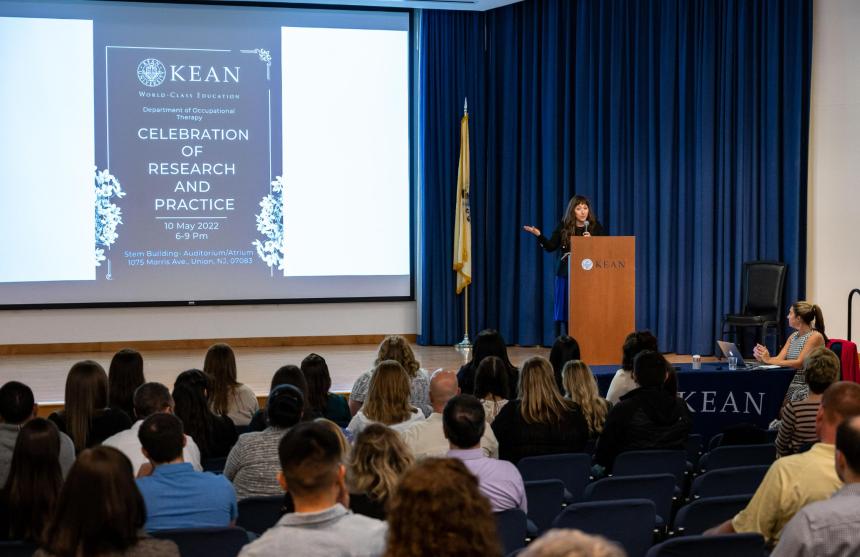
Celebration of Research and Practice
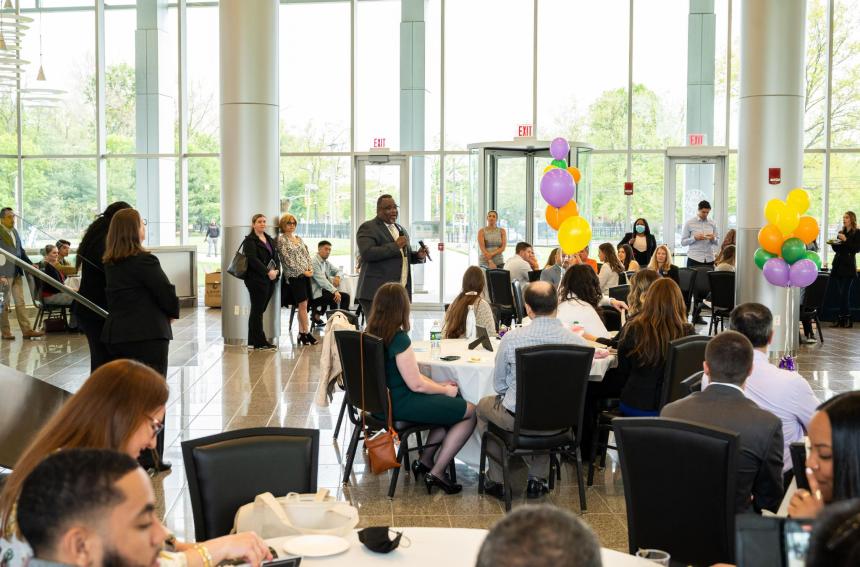
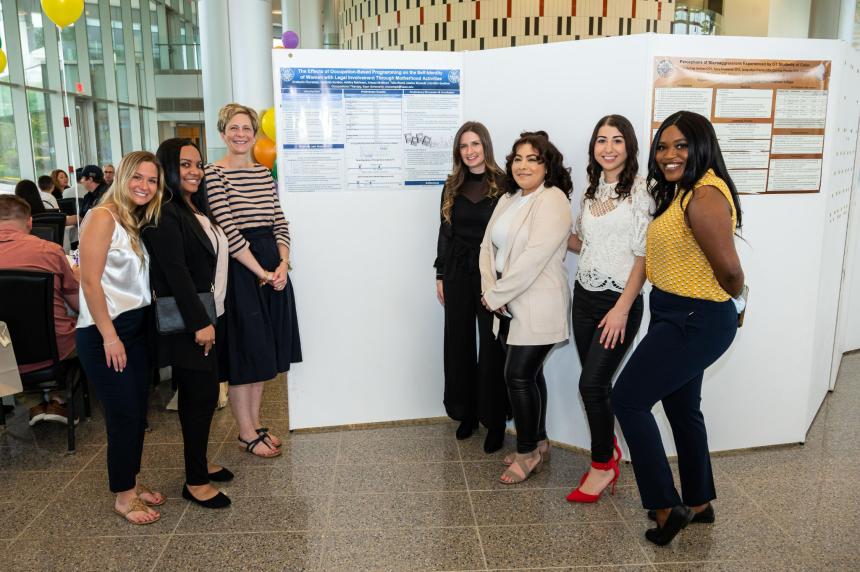
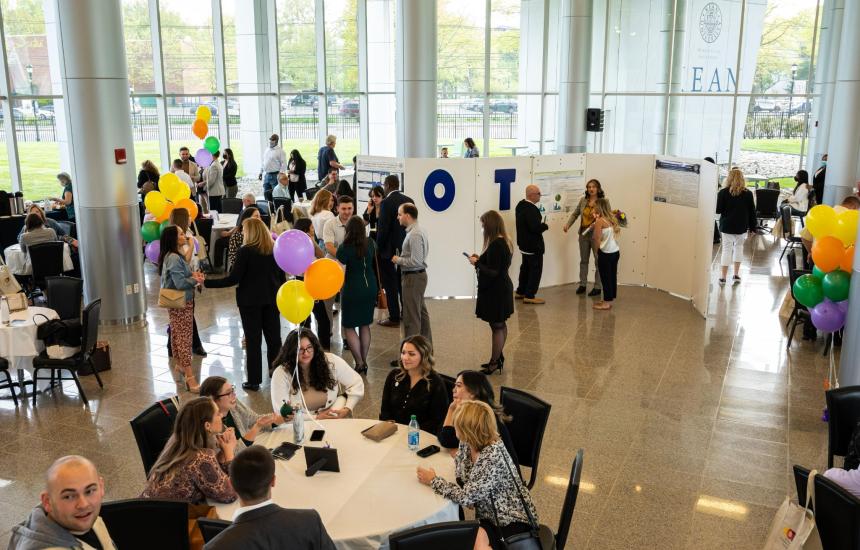
Every year, the Department of Occupational Therapy at Kean University hosts a wonderful evening for students and faculty, highlighting the hard work of occupational therapy graduate students completing scholarly projects during their time at Kean. Family members gather for light refreshments and drinks and to view posters and creative presentations designed by the occupational therapy second-year graduate students. In recognition of the start of the clinical phase of their education, students each receive a pin, presented by a faculty member from the Department of Occupational Therapy. Students also read the Kean University Department of Occupational Therapy Oath, demonstrating their commitment to the OT Code of Ethics to serve the community faithfully as they transitioned to pre-clinical practice.
Kean University Research Days
During Kean University's annual Research Days, our second-year students get to showcase the research projects that they have developed over the course of their academic semesters alongside other graduate students.
2024 Kean University Research Days

By: Shauna Corbet, Hannah Criollo, Bianca DeSousa, Rebecca Gasin, Lauren Nidelsky, Michelle Vazquez-Lopez
Faculty Advisor: Amanda Sarafian, EdD, OTR/L

By: Elizabeth Wynne, Samantha Fisch, Claire Hunter, Kristina Malkin, and Cynthia Reyes Faculty Advisor: Jennifer Gardner, MS, OTD, OTR/L and Margaret Swarbrick, PhD, FAOTA
2023 Kean University Research Days

By: Carlo Alves, Alexis Castanheira, Gabriella Duran, Danielle Sainato, Tamar Stern
Faculty Advisor: Claire Mulry, OTD, OTR/L, CAPS, FAOTA

By: Gina Tartza, Sabrina Caceres, Jessica Isaac, Stacie Kowalski, and Jennifer Loshiavo
Faculty Advisor: Kelly Sullivan MS, OTR/L & Zahava Friedman PhD, OT, BCBA

By: Zainab Naqvi, Brianna Amorin, Arielena Duran, Marie Khalil, Tiffany Lintakoon, and Lydia Martinez
Faculty Advisors: Zahava Friedman PhD, OT, BCBA and Kate Nealon PhD CCC-SLP BCS-CL

By: Matthew Arrowood, Anthony Barrios, Mia DePalma, Tara Ryan, Kayla Skolnik,
Faculty Advisor: Victor Michael Camacho, OTD, OTR/L
Participating in a Diabetic Foot Care Program: Experiences and Perceptions of Ethnically Diverse Urban Dwelling Adults
By: Emily Badalis, Erika Quinto, Diana Ludizaca, Elisa Dizeo, Wensly Martinez
Faculty Advisor: Victor Michael Camacho, OTD, OTR/L

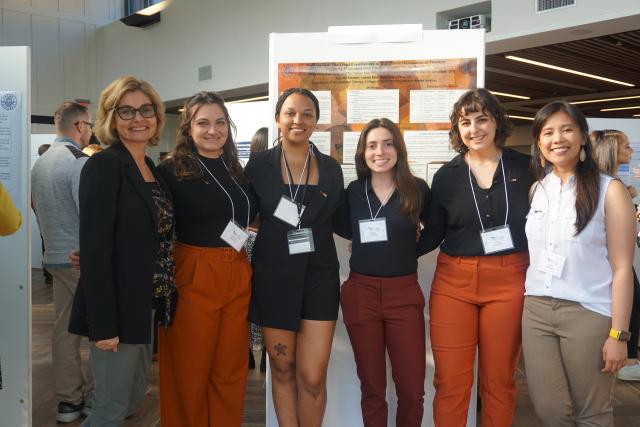
By: Therese Meily, Kijai Herring, Tamar Mor, Flaminia Avantifiori, Rachel Lanzalotti
Faculty Advisor: Laurie Knis-Matthews, Ph.D, OT
Doctoral Residencies
As part of entry-level OTD curriculum, doctoral candidates complete a 14 week residency project in focused areas such as clinical practice skills, leadership, theory development, program development, policy development, advocacy, education, research and administration. These residencies prepare students with advanced skills in a specific area of practice and support leadership development in evolving healthcare and community settings.
Incoming 2022 OTD Class
Dr. Danielle Arrabito
Fly Beyond Limits: Air Travel Experiences, Adaptations, and Accommodations of Passengers with Disabilities
The purpose of this concurrent mixed-methods research was to explore the procedures
passengers with disabilities and caregivers have when requesting support, the personal
adaptations used in advance or throughout the air travel experience, the impact of
accommodations and adaptations on air travel satisfaction, the utilization of accessible travel
resources, and the perceived benefit of occupational therapy practitioners as a resource for air travel participation.
Dr. Stephanie Correa
Making Core Connections: Creating Awareness of Pelvic Health for Collegiate Female Athletes Through an Occupational Therapy Lens
Dr. Dianna Miszcuk
The Balance Blueprint: A Wellness-Based Occupational Therapy Pilot Program for Adults in MAT-Based Opioid Recovery
Dr. Karmena Tawfeek
Beauty Beyond Barriers: Adaptive Cosmetics and Grooming Routines Through an Occupational Therapy Lens
Dr. Alexis Faria
Screens With Purpose: Fostering Intentional Tech Use to Support Child Development Through the Sensory Emotional Lens
Dr. Sara Orbe
Eye-Dentify: Evaluation of Vision Screening Education Modules for Occupational Therapists Working with Children with ASD and ADHD
Incoming 2021 OTD Class
Dr. Matthew Ungerer
Who's Hungry
The intention of this 14-week proposed doctoral residency project was to further explore advocacy efforts on behalf of a state-organization, the New Jersey Occupational Therapy Association (NJOTA). This will be accomplished through a leadership role with the intention to further improve the presence of occupational therapy practitioners in the community, expand upon the mission of their Justice Equity Diversity Inclusion (JEDI) subcommittee, and boost recruitment of members through the means of educating practitioners regarding the accessibility and inclusion of resources when obtaining food and beverages at sports stadiums. The method for distribution of this information will be through videos and monthly newsletters, which will be posted and accessible for members via the organization’s (NJOTA’s) social media platform(s) and via the member’s emails (when receiving the monthly newsletters).
Dr. Carli Block
A Sense of Disney
An virtual, asynchronous educational program to support families with an autistic member plan and prepare for a Walt Disney World vacation.
Dr. Gabriella Duran
Safe Connections
Safe Connections is a sexual abuse prevention program that utilizes sexual health education as a means to reduce risk factors and increase protective factors associated with sexual abuse amongst adults with intellectual/developmental disabilities.
Dr. Therese Meily
Creative Expressions
Creative Expressions is a 6-week pilot program created to promote the occupation of health management, which involves client factors such as emotional regulation, utilizing social support, and making time for restorative leisure activities. This program was created for any adult (18+ years old) who identifies as part of the LGBTQIA+ community. By implementing trauma-informed care principles and the use of arts & crafts as a therapeutic medium, the doctoral candidate sought to advance empirical evidence for LGBTQIA+-affirming occupational therapy interventions, and to revitalize the profession's use of art.
Dr. Tamar Mor
On Your Own Path
OYOP is a 14-week occupational therapy doctoral residency, or capstone, conducted by Tamar Mor at Kean University. It is the development, implementation and implications of an OT-based program to support individuals who have left an Ultra-Orthodox Jewish community adapt to their new roles, occupations and environments. This includes the process and implementation components to this project as well as the Program Guide.
Dr. Danielle Sainato
Brain Boost: Thoughtful Minds for Life
Is an OT-based pilot program with a cognitive approach focused on teaching and maintaining life skills for adults with intellectual and developmental disabilities (IDD), in order to prepare them for age-related cognitive changes.
Incoming 2020 OTD Class
Dr. Deanna Gerard
Accessibility Between the Lines: Addressing the Impact of Inclusive Design on Community Partnership
Dr. Jessica Onorati
I'll Tell You Now: Perceptions of Health Management Amongst Deaf and Hard of Hearing Individuals
Communication in the healthcare system is essential for Deaf and hard-of-hearing (DHH) American Sign Language (ASL) users to understand all aspects of their health, such as medical terminology, medication instructions, post-op procedures, and implications for their diagnosis. However, healthcare settings do not always follow or are unaware of, DHH individuals’ right to effective communication through the Americans with Disabilities Act (ADA). This has led DHH ASL users to report a lack of effective communication methods, Deaf cultural awareness, and understanding of their health appointments. To further explore DHH ASL users’ experience, a qualitative study was conducted to explore the following research question: “What are DHH ASL users’ experiences when managing their health?” Two participants took part in in-depth interviews. After thematic descriptive analysis, the following themes emerged: (1) growing up, there were no interpreters for me during my healthcare appointments, (2) If I wanted effective communication at my healthcare appointments, I needed to learn about ADA and how to advocate for myself, but sometimes I couldn’t get access to full communication, and (3) Healthcare professionals should now about ADA, but I am always left educating them on my rights.
Dr. Jackeline Artiles
Let's Be Aware
The development of this educational pilot program is to increase the knowledge of healthcare practitioners on the needs of human trafficking survivors to raise awareness and advocacy. In addition, the pilot program targets occupational therapists (OTs) to bridge
the gap between them and HT survivors to contribute to holistic, client-centered, trauma-informed interventions, which can promote wellness and quality everyday participation. By emphasizing the importance of such interventions, this program encourages healthcare practitioners to provide trauma-informed care to HT survivors by providing survivor-informed and research-based educational modules.
Dr. Melinda Dudley
The Peer Platform: A Collaborative Path to Mental Health Recovery with Peer Support and Occupational Therapy
The Peer Platform is an evidence-based education program that serves both peer supporters and individuals in recovery from serious mental illness. This program aims to promote occupational justice by providing educational opportunities to these underserved populations. This program offers module-based adult learning on physical health, wellness, and communication methods within peer-based settings. The Peer Platform program was designed using a collaborative approach between occupational therapy, peer supporters, and people in recovery. The Peer Platform was created with the occupational therapy lens to promote occupational performance within health management while considering occupational context, performance patterns, client factors, and performance skills of peers and people in recovery. Additionally, this program was designed to empower the peer community and meet its needs for increased role clarity and continued education, as it is intended to be a peer-led educational program.
Dr.Angela Sista
Are New Jersey Occupational Therapy Practitioners Getting Left Behind?: Policy Changes and Advocacy Efforts Needed to Evolve with the Healthcare System
Dr. Geena Santomo
Health (Management) is Wealth: An Occupational Therapy Program to Enhance Coping Post-Incarceration Through Yoga & Mindfulness
Incoming Class 2019
Dr. Molly Dunn
Breaking the Silence: Development of a Continuing Education (CE) Course on Elder Abuse for Occupational Therapy Practitioners
The purpose of this project was to design and publish an evidence-based CE course through the American Occupational Therapy Association (AOTA) to teach occupational therapy practitioners how to identify, address, and report elder abuse.
Dr. Ashley Fuentes
Occupational Therapy in ACTion
The purpose of this doctoral residency research project is to investigate whether occupational therapy services were beneficial in improving Assertive Community Treatment (ACT) clients’ occupational performance and satisfaction from the clients’ and staff members’ perspectives. A mixed method research design was utilized to retrospectively analyze quantitative data, ACT clients’ existing Canadian Occupational Performance Measure (COPM) scores, and prospectively analyze qualitative data gathered from staff interviews. Five ACT clients’, who received occupational therapy services, data was included, and 6 ACT staff members agreed to participate. Clinical significance was found among clients’ pre- and post-performance and satisfaction scores in the COPM domains of self-care, productivity, and leisure. Statistical significance, using a Wilcoxon Signed-Rank Test, was found in clients’ overall, self-care, and productivity pre- and post-performance and satisfaction scores. Three themes emerged from staff interviews including, 1) clients’ engagement increased after receiving occupational therapy services, 2) staff members’ knowledge regarding the occupational therapy profession increased, and 3) occupational therapy provided a strong contribution to a holistic approach on the team. Overall, positive findings were yielded, indicating occupational therapy services benefited ACT clients by improving their occupational performance and satisfaction.
Dr. Daryll Henson
Occupational Therapy's Role in Climate Change and Sustainability
The mission of this doctoral residency experience is to develop a guidebook with strategies for incorporating OT's role in climate change and sustainability in OT education. This guidebook is specifically designed for USA OT educators, as it references the Accreditation Council for Occupational Therapy Education (ACOTE) Educational Standards and the American Occupational Therapy Association (AOTA) supporting documents.
Dr. Allison Inserra
Sensational Scholars
The purpose of this Pilot-program is to support the neurodiverse undergraduate student community at Kean University by empowering individuals with knowledge and personalized strategies to better cope with the challenges and stressors of being a college student. The program included the delivery of both individual and group OT services and measured
student outcomes in the areas of stress, anxiety, sleep, and perceived academic performance (n=8). The Adolescent/Adult Sensory Profile was utilized as a means to further understand student’s Sensory Processing patterns and further explore implications to functional performance. Program outcomes were measured using the Canadian Occupational Performance Measure, Perceived Stress Scale, General Anxiety Disorder-7, and the Pittsburgh Sleep Quality Index. Subjective information was retrieved through the use of a Post-program Evaluation Questionnaire created by the Doctoral Candidate, as well as from a focus group and written feedback in the form of exit-slips that were completed after each group session. Overall findings included positive change in standardized assessment tools, as well as increased knowledge of sensory processing and carry-over of sensory strategies, which indicate improved management/coping of mental health challenges and improved satisfaction and performance across areas of occupation.
Dr. Susan Kushner
Deaf Culture in a Hearing Healthcare Workforce
Background
Lack of knowledge of the Deaf community, their culture, and communication needs indicates a need for training for healthcare professionals in order to provide Deaf clients with better accessibility and quality service.
Objectives
The goal of this project is to create more culturally sensitive healthcare workers through the implementation of a virtual course.
Methodology
Purposeful recruitment was used to gather 23 participants. A virtual 5-week asynchronous course was implemented, consisting of 4 modules and in-person practice sessions. Topics covered include Deaf culture, American Sign Language, and relevant legislation.
Results
Using a Wilcoxon Signed-Rank Test, statistical significance was found in module 1 group A (p = 0.02), group B (p = 0.042), module 2 group A (p = 0.01), group B (p = 0.043) and module 3 group AB (p = 0.022).
Conclusion
The results are indicated to be beneficial in increasing cultural awareness and sensitivity of healthcare professionals.
Dr. Erik Horn
Mentorship: A Pathway to Success
Occupational therapy professionals are tasked with achieving and maintaining career-long competency in knowledge, skills and performance through a process of life-long learning (World Federation of Occupational Therapists, 2012, as cited in Doyle, Lachter & Jacobs, 2019). Mentoring can provide this professional growth. Therefore, mentoring is vital in occupational therapy and by educating mentors will help advance the mentee in their practice. When support actions are in place, new graduates reported enhanced learning, confidence and self awareness (Moores & Fitzgerald, 2017). Educational modules on mentoring will equip the mentor with the skills needed to mentor and help identify how to maintain mentorship within their organization and area of practice. This includes transitioning entry-level clinicians, those changing practice settings, as well as those needing additional support. The framework for these educational modules was developed from multiple needs assessments and a scoping review conducted by Doyle, Lachter, & Jacobs (2019), where mentoring was researched across many occupational therapy professional settings, yielding four main elements of importance: support, learning, process, and relationship. Successful mentoring mechanisms were identified as goal-setting, problem-solving, resource sharing, critical thinking, reflection, and communication. As modules were established, this evidence-based research was incorporated in each one. After completion of my mentorship program the results showed mentors felt more confident, empowered, and prepared with the tools to equip and guide their mentees to begin a pathway to success. In these newly developed modules, the level of material is appropriate for the intermediate practitioner who has been in the field for 2-5 years, with good clinical skills and a working knowledge of current practice trends, and wanting to increase their skill in mentoring.
Dr. Jessica Ortiz
Medical Cannabis & its Implications on Occupational Therapy Practice
Incoming 2018 OTD Class
Dr. Claudia Salinas
Kid Kapable
Kid Kapable is an occupational therapy group using gymnastics as the means for change to promote social interaction with peers, strength, range of motion, and balance for children with motor skill difficulty.
Dr. Samantha Krych
The Heart of the Matter
The Lifestyle Redesign® cardiac wellness program will be made available for those who have limited access to healthcare, whether from social, economical, or environmental reasons. While heart health in the U.S. is declining overall, minority groups experience health disparities related to CVD. These inherent inequities, including various social determinants to health, are barriers to receiving and understanding the impact controllable risk factors have on your heart health. Bringing the cardiac wellness program to low income senior housing facilities will increase accessibility and provide the
intervention needed to make sustainable changes to one’s lifestyle in order to better manage and prevent cardiovascular conditions.
Dr. Kelly Malanga
The Lifelong Learner
Lifelong learning is essential in the lives of all people, particularly individuals with disabilities. However, adults with disabilities continue to struggle to find and participate in community activities, such as education-based classes, due to a lack of services and supports, lack of appropriate programming, and negative attitudes and discrimination (Gibbons et al., 2018; Hall, 2017; Khasnabis et al., 2010; Miller-Warren, 2016). This phenomenological qualitative research study explored the perspectives of adults with disabilities and their family members on lifelong learning and the barriers and facilitators of engaging in lifelong learning within their communities by conducting semi-structured interviews and observations. Results yielded varied definitions of lifelong learning, the benefits of technology for self-directed learning, the impact of adapting to their virtual environment during the COVID pandemic, and the influence of socialization within classes on individuals’ social and emotional wellbeing. Also, participants provided information on the barriers to participating in inclusive education opportunities, including a lack of knowledge on resources and disability stigma, as well as the potential facilitators of education on advocacy, networking, and inclusion of adults with disabilities. These findings are essential to the body of knowledge related to the benefits of lifelong learning for adults with disabilities. Researchers recommend educating individuals with disabilities and their family members on advocacy, networking, and adaptations to continuing education classes in order to increase the inclusion of adults with disabilities within their communities and aid this population in pursuing lifelong learning.